pan-Aves


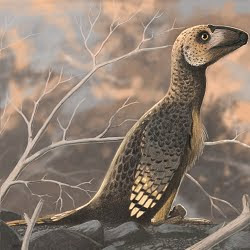
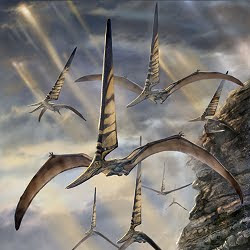
Zleva doprava: ara hyacintový (Anodorhynchus hyacinthinus), zdroj: flickr.com (JMJ32); Gigantoraptor a Alectrosaurus, autor Luis V. Rey
Zobrazují se příspěvky se štítkemIchnofosilie. Zobrazit všechny příspěvky

Svrchní křída Pyrenejí: jak moderní ptáci přišli ke svým vejcím

    Končí Velikonoce, svátky dinosauří reprodukční biologie. Nevěříte mi? Jak potom ale vysvětlit všechna ta žluťoučká kuřátka a vajíčka:

Prekociální mládě teropodního dinosaura Gallus gallus, zachycené z anterolaterálního pohledu (vlevo), a vejce téhož taxonu (vpravo). Za povšimnutí stojí u drobného teropoda hlavně stále přítomný vaječný zub, složený z výběžků na obou čelistech, a oblast měkké, voskovité kůže okolo nozder. Jejím rohovatěním u některých neoavianů vznikne další plát ramfotéky, tzv. narikorn (Hieronymus & Witmer 2010); trubkonosí ptáci dostali své jméno právě podle tohoto elementu, který je u nich silně keratinizovaný a výrazně oddělený od zbytku zobáku. Tělo je stále pokryto tzv. neoptile, prachovým peřím, které se co do struktury značně podobá vláknitému integumentu nacházenému u fosilií terizinosaurů, tyrannosauroidů a ptakoještěrů. Vejce zaujme především svým asymetrickým zaobleným tvarem, dosti rozdílným oproti svým dinosauřím předkům. Zaujalo by i specifickou mikrostrukturou, tu ovšem fotografie ke své velké škodě nezachytila. (Modifikováno z crazy-frankenstein.com)

    Přišlo mi tedy nanejvýš vhodné zařadit na blog nějakou aktuální studii s touto tematikou, a naštěstí pro mě přišla s vhodnou inspirací vtipně laděná tisková zpráva University of Leicester. López-Martínez & Vicens (2012) popisují z Katalánska nový typ dinosauřího vejce, odkrytý ze souvrství Aren a pocházející z období svrchní křídy (pozdní kampán až maastricht). Fosilní vejce mají obdobně jako další pozůstatky jiné než kosterní povahy (např. otisky stop) vlastní systematiku, která více či méně kopíruje systematiku klasickou. Je zřejmé, že jednotný systém pro oba typy nálezů by nefungoval – máme-li taxon známý výhradně z kosterních pozůstatků, nemáme žádnou představu o tom, jak vypadala jeho vejce, a nemůžeme mu tedy žádná nalezená vejce připsat. Řešením, které paleontologové zavedli, je tzv. "parataxonomie", v níž fosilní vejce dostávají vlastní "druhy" (oospecies), "rody" (oogenera) i "čeledě" (oofamilies). López-Martínez a Vicens popsali nalezené skořápky jako nový oorod a oodruh Sankofa pyrenaica.
    Sankofa patří mezi tzv. prizmatická vejce, což znamená, že ve spodní části skořápky mají krystaly kulovité a v horní hranolovité. Vejce byla nalezena v téměř vertikální pozici na lokalitě, kterou autoři interpretují jako někdejší bariérový ostrov – úzký písečný val souběžný s pobřežím. Nejzvláštnější ovšem je, že tvarem i velikostí připomínají běžná slepičí vejce, ačkoli jejich původce přecházel kura domácího o 70 milionů let. Fylogenetická analýza potvrzuje jejich spojitost s vejci ptáků (včetně troodontidů, zástupců populárního "raptořího" kladu Deinonychosauria); zajímavější je však analýza morfologická. Autoři prozkoumali, s jakými vejci se bude Sankofa shlukovat v morfoprostoru, tedy v imaginárním prostoru obsahujícím všechny možné stavy dané soustavy (v tomto případě tedy sauropsidího vejce – asi nejde o nejpůsobivější ilustraci daného konceptu, ale co už). Obecné rozdíly mezi oběma kategoriemi jsou zřejmé: ptačí vejce bývají asymetrická, s jasně rozlišeným ostrým a tupým koncem; zatímco ta dinosauří jsou protáhlejší, méně zaoblená a souměrnější. Morfoprostorový rozbor zjistil, že spolu s vejci blíže neurčeného argentinského ptáka z období kampánu se Sankofa nachází na půli cesty mezi vejci neptačích dinosaurů a moderních ptáků. Tento ootaxon se však od vajec žijících ptáků odlišuje nejen drobnými odchylkami ve tvaru, ale i mikrostrukturou skořápky. López-Martínez & Vicens (2012) tedy přisuzují vejce neptačímu teropodovi, který ovšem musel být dosti podivný. Měl mít totiž stejně jako moderní ptáci jen jeden funkční vejcovod, zatímco ještě takový Troodon měl (jako každý normální blanatý tetrapod) vejcovody dva, soudě z toho, že vejce v jeho hnízdech jsou uspořádány v párech (Varricchio et al. 1997; Makovicky & Zanno 2011). Podle autorů představují katalánská fosilní vajíčka další doklad o tom, jak blízcí si ptáci s neptačími dinosaury ve skutečnosti jsou.

Identifikační karta dinosauřích vajec. Tmavošedá jsou vajíčka neptačích dinosaurů, světlešedá vejce moderních ptáků (odshora dolů: madagaskarský sloní pták, kondor, labuť, alkoun, polák vlnkovaný, káně rudoocasá, slepice). Velikonoční vejce pro srovnání. (Modifikováno z 2.le.ac.uk)

Zdroje:

Nové abstrakty k 10.12.2010

    Přehled nových abstraktů jsme tu neměli už dlouho. Ten dnešní nebude tak dlouhý jako několik předcházejících, konec konců, kvůli psaní extrémně dlouhých článků (jako je ten o velikosti a evoluci pseudozubých ptáků, zrušení "druhu" nebo azhdarchově osteologii) jsem neměl čast napsat o spoustě dalších novinek, jako je popis taxonů Proplanicoxa, Sellacoxa a Dollodon seeleyi, které pokračují v trendu "roztrhávání" extrémně rozsáhlého taxonu Iguanodon na spoustu nových jmen (v progresivnější nomenklatuře bychom si mohli iguanodona ponechat s tím, že už nejde o terminální klad, ale taxon s rozeznatelnou vnitřní strukturou), nebo publikace už zbrusu nových bazálních iguanodontů Iguanacolossus a Hippodraco a lambeosaurina Blasisaurus. Některé tyto události snad stručnějšími články doženu.

    Nyní je ovšem řada na nových abstraktech. Skutečně v detailu hodlám projet jen dvě studie, které se nám snaží dokázat, že BAND ještě není mrtev. Obě přitom souvisí s evolucí peří.

    Polští paleontologové (Dzik et al. 2010) vynášejí znovu na světlo taxon, v jehož souvislost s ptačími počátky nevěří už od 80. let ani ti nejzarytější BANDiti - Praeornis. Původně jej popsal ze svrchní jury Kazachstánu Rautian (1978) - holotypem zde bylo něco, co autor identifikoval jako fosilní pero. Rautian neváhal a označil jej za pozůstatek ptáka primitivnějšího než byl Archaeopteryx, kterému pohotové vytvořil (ano, na základě jediného pera) "podtřídu" Praeornithes. Důkazem měla být absence sekundárních větví (tzv. barbules - Nessov 1992). Bock (1986) ovšem objekt prohlásil za list cykasu a Nessov (1992) rovnou prohlásil jméno Praeornis za mladší synonymum pro Cycadites saportae. Dokonce i takový Feduccia (1995) odmítl považovat preornise za ptáka.
    Jenže situace takto jednoduchá není. Glazunova et al. (1991) fosilii prozkoumali elektronovým mikroskopem a došli k závěru, že její mikrostruktura se skutečně podobá peří dnešních pštrosů. Kuročkin (2001) uznal její ptačí identitu, což - přiznám se - těžko beru vážně s ohledem na autorovy fylogenetické hypotézy (Kuročkin 2006a,b). Dzik a spol. nyní v preornisově materiálu zjistili stabilní složení izotopů uhlíku, což by mělo podporovat jeho živočišný původ. Trojrozměrné zachování nasvědčuje tomu, že centrální stvol musel být složen z tvrdé organické hmoty - což nahrává hypotéze o keratinovém tělesném pokryvu. Výzkum polských autorů se zakládá na novém exempláři, jehož spojitost s preornisovým holotypem dokazuje podobná stavba se třemi "prapory" po stranách masivního "ostnu", které se až do samé špičky příliš nezužují (viz obrázek dole). Právě třetí prapor je zde podivný - nachází se pod jedním z těch běžných, takže průřez perem tvarově připomíná písmeno λ. Na rozdíl od holotypu PIN 2585/32 ovšem nejsou tyto prapory rozděleny ani na větve prvního řádu (barbs) a jejich vnitřní strukturu ukazují pouze jakési paprsky nebo lišty. Ty ohraničují jednotlivé větve i u holotypu, tam mezi nimi ale zvětrávání odstranilo organickou hmotu, která je u druhého exempláře hojná a která spojuje tyto lišty do kompaktního útvaru. První místo abstraktu, ve kterém na nás zaútočí BAND, je konstatování, že tato stavba se třemi prapory může být znakem ancestrálního pera, které mělo vzniknout ze hřbetních šupin snad fungujících jako ornamentace v pohlavním výběru. Dzik a spol. si představují, že takové šupiny byly podobné tomu, co známe od svrchně-triasového "pravděpodobného megalankosaurida" longiskvamy (o tom, co si o "protoperech" longiskvamy myslí většina paleontologické komunity více zde). Podle autorů se prvotní šupina s průřezem ve tvaru písmene Λ změnila na již zmiňovaný útvar podobný λ - což je fáze pozorovaná u preornise - který potom ztratil třetí prapor. Aby mohla nově vzniklá pera pokrýt kůži stejným způsobem, jakým ji dříve měly pokrývat šupiny, musely se jejich osy sklonit o 90°. Kvůli této rotaci nabyla báze pera válečkovitý tvar.
    Dokonce i kdyby Praeornis skutečně reprezentoval ptačí pero - nic proti tomu, ve svrchní juře to nikoho nešokuje a známe dokonce dost možná i pera starší - není to pochopitelně důvod k útoku na dinosauří hypotézu ptačího původu. To jediné, co Dzikovi a spol. umožnilo v tomto směru dalekosáhle spekulovat, je podivná stavba pera s kompaktním praporem nerozlišeným do jemnějších větví. Něco podobného ale známe z ocasních per epidexipteryga (Zhang et al. 2008), tzv. ETFs (Elongated Tail Feathers), kde volné distální větve vyrůstají z jakési membrány - přestože postrádají preornisův unikátní "třetí prapor". Xu & Guo (2009) toto uspořádání označili za "morfotyp 8" a jejich popis velmi výrazně připomíná způsob, jakým Dzik et al. (2010) popisují preornise: výrazný, silný osten s nerozlišeným praporem na obou stranách.

Pero nebo list? Nový exemplář taxonu Praeornis odhaluje kromě již dříve známé absence sekundárních větví také "třetí prapor", který posloužil polským paleontologům k rozsáhlé spekulaci o vývoji ptáků. (Zdroj: Dzik et al. 2010: Figure 6)

    Daleko diskutovanějším příspěvkem do diskuze je další práce proslulého T. Lingham-Soliara, který už několik prací o evoluci peří z BANDitského pohledu napsal (nejznámější je zřejmě jeho spoluautorství nechvalně známé práce Feduccia et al. 2005). Tedy alespoň pokud diskutovanost měříme z DML, kde vlákno o jeho nové studii obsahuje již přes 70 příspěvků (časem se ovšem zvrhlo do debaty o složitosti života, a když říkám "složitosti života", myslím to doslova).
    Jeho nová studie, charakteristická - jak trefně poznamenal Jaime Headden - nadužíváním slova "merit" v abstraktu, je reakcí na letošní výzkum o identifikaci melanozómů (pigmentových buněčných organel) ve fosilních perech a zabarvení čínských opeřených dinosaurů (Zhang et al. 2010). Není divu - právě tento autorský kolektiv použil melanozómy jako důkaz, že vlákna nalézaná ve výborně dochovaných fosiliích reprezentují tělesný pokryv homologický s ptačím peřím spíše než jakousi "kolagenovou síťovinu" původně uloženou ve škáře. Lingham-Soliar nyní "útok" v ornitologickém žurnálu oplácí. Krátce shrnuje tvrzení autorů: totiž že tělíska o řádově mikrometrové velikosti, odhalená skenovací elektronovou mikroskopií ve zmíněných vláknech, jsou feomelanozómy. (Zhang a spol. ve skutečnosti identifikovali oba základní typy melanozómů, resp. oba základní typy těch melanozómů, jejichž tvar koreluje s obsaženým pigmentem - kromě feomelanozómů také eumelanozómy. Více o těchto pojmech v již odkazovaném článku.) Podle něj jde o optický klam, založený na snímcích s nedostatečným rozlišením. (Stejné metodologické pochybení je kritizováno poměrně často. Elektronický žurnál PLoS ONE např. často otiskuje ilustrace s rozlišením přes 20 megapixelů, ale na použití rozmazaných snímků postavili dalekosáhlé vývody o ektotermních teropodech Ruben et al. [1997], Peters [např. 2004] se s nimi pokusil zrevolucionalizovat pterosaurologii a Nudds & Dyke [2010] z něj byli oviněni Paulem [2010].) S 2x větším rozlišením se ukazuje, že struktury nemají jednotný tvar ani velikost, které by šlo s (feo)melanozómy ztotožnit. Zhang a spol. navíc měli opominout statisticky spolehlivá měření a velikostní údaje pro tělíska, která přinesli, neodpovídají realitě. Velmi dobrý argument Lingham-Soliar vznáší, když říká, že původní autoři nepřinesli jediný důkaz pro své tvrzení, že údajné melanozómy se nacházejí uvnitř vláken. Studii Zhanga a ostatních nemám k dispozici, když o ní ale psal Ed Yong, použil slov "zdají se být". Tato věc je přitom pro jejich interpretaci zcela zásadní - kdyby se sporné struktury nacházely mimo vlákna, pak bychom museli alespoň nějakou přijatelnost přiznat i hypotéze, se kterou přišli Lingham-Soliar & Plodowski (2009) už dříve - že pigment pronikl do sítě kolagenových vláken rozkladem vrchních vrstev kůže. Zhang et al. (2010) neprovedli příčný ani tangenciální řez vláknem a ani žádný takový ve vzorku neobjevili.
    Autor také upozorňuje na falešnou dichotomii mezi tvrzeními, že pozorované struktury jsou buď bakterie (což Zhang a spol. vyvrátili poměrně efektivně) nebo že jde nutně o melanozómy. Podle něj nabízí třetí, původně vůbec nezváženou alternativu dekompoziční (rozkladové) procesy - což je hlavní předmět Lingham-Soliarova výzkumu. Argumentuje pak experimenty s rozkladem kolagenu z rybí a plazí kůže. Ani v jednom případě se nejedná o skupinu blízce příbuznou teropodům - je tady totiž důvodné podezření, že "plazi" jsou zastoupeni ichtyosaury, skupině, jejímuž výzkumu se Lingham-Soliar v souvislosti s měkkými tkáněmi dlouhodobě věnuje (Lingham-Soliar 1999, 2001, 2003). Ichtyosauři jsou přitom sesterskou skupinou ještěrů (Sauria), tedy kladu zahrnujícího šupinaté, ptáky, jejich posledního společného předka a všechny jeho potomky. Pouze tam, kde jsou si dvě skupiny blízce příbuzné, mezi nimi můžeme provádět smysluplná srovnávání: je tedy docela v pořádku porovnávat způsob získávání potravy u vymřelých teropodů a žijících ptáků - pokud nejste BANDit - u pterosaurů a ptáků už si tím tak jistí být nemůžeme a pokud jde o ryby a ptáky... Už Feduccia et al. (2005) trochu šokovali, když se snažili vysvětlit hypotézu kolagenových vláken pomocí žraločí kůže, a celá věc je o to problematičtější, že hustá síť kolagenových vláken ve škáře bývá často pokládána za adaptaci umožňující vodním obratlovcům udržovat tvar těla (Wainwright et al. 1978; Pabst 1996, 2000; Lingham-Soliar 2001). Pak by ovšem nemělo smysl hledat jí u dinosaurů. Zpět však k tomu, co Lingham-Soliar říká ve své nové práci: podle něj skenovací elektronová mikroskopie odhalila v rozložené kolagenové síti jeho vzorků kulové, elipsoidní i destičkovité útvary, často dokonce podobnější melanozómům, než ty v sinosauropterygově (?)integumentu. Tyto struktury přitom prokazatelně vznikly během rozkladu. Tytéž útvary navíc můžeme najít ve svrchnotriasové ichtyosauří (a jsme tady zas) fosilii - domnělé melanozómy jsou mimořádně podobné strukturám označovaným jako "67-nm D-bands". Jde o kolagenová vlákna, která se v pravidelných rozestupech "překříží" nebo "prostřídají", přičemž oblast kontaktu zabírá asi čtvrtinu délky vlákna. "67-nm" pak znamená, že k těmto kontaktům dojde na každém 67. nm (tato pravidelnost je dána molekulární strukturou vlákna). Podle Lingham-Soliara jde o důkaz toho, že zjištění Zhanga a kolektivu jsou vědecky bezcenná.
    A teď - co s novým výzkumem dělat? Zas nám chtějí sebrat opeřené dinosaury! Alespoň z diskuzí na Dinosaur Mialing Listu lze usoudit, že dinosaurologové mají pro Lingham-Soliara určitou slabost, kterou - při srovnání s jinými BANDity - není těžké sdílet. Jeho práce jsou založeny na aspoň nějakém výzkumu, kdežto Feduccia, Martin a jim podobní posledních dvacet let argumentují už jen svou neschopností pochopit moderní fylogenetiku. Jejich názory na příbuzenství archosaurů zamrzly v padesátých letech, kdy jsme věděli, že tato skupina zahrnuje plazopánvé, ptakopánvé, ptáky, krokodýly, jakési "tekodonty" a možná pterosaury - a tím to končilo. I Lingham-Soliarovi však byla vyčítána některá pochybení. Tak především - autor srovnává to, co vidíme ve fosiliích, s žijícími organizmy, opomíná ovšem jiné fosilie. Tento bod zdůraznili Jaime Headden a Renato Santos. Je zde totiž nemalé riziko, že kdybychom analyzovali integument některých nekontroverzně ptačích (definici by splnili třeba i konfuciusornitidi) taxonů z čínských lagerstätten, možná bychom v něm taky našli "falešné melanozómy" připomínající 67-nm kolagenové D-proužky. To by vrhlo pochybnosti spíš na Lingham-Soliarovy metody než na dinosauří původ ptáků. Santos také kritizoval fotografii, kterou autor svá zjištění dokumentoval - ta totiž není o nic kvalitnější než ty, kterými svou studii vybavili Zhang et al. (2010). Vůbec nejzásadnějším protiargumentem je ale fakt, že Lingham-Soliar - aniž by to pro něj bylo časově nemožné - nevzal ve své práci v úvahu výsledky jiného týmu, který se letos na teropodní melanozómy zaměřil (Li et al. 2010). Na tuto chybu upozornil Jason Brougham, autor, který se nedávno zapojil do kritiky letošního článku o mikroraptorově biomechanice. Věc je o to zásadnější, že Li et al. (2010) kritizovali Zhangův tým ze stejných chyb, jako Lingham-Soliar, nabídli však podobné, jen daleko lépe podložené výsledky:
A recent study [Zhang et al. 2010] reported melanosome impressions in Cretaceous feathers, but the limited sample of small regions of distinct animals and comparison based simply on gross melanosome shape prevented the interpretation of plumage color patterns.
Li et al. 2010:1369
("Nedávná studie [Zhang et al. 2010] ohlásila otisky melanozómů v křídovém peří, ale vzorek omezený na malé oblasti těla různých zvířat a srovnání založená jednoduše na přibližném tvaru melanozómů neumožnila interpretaci barev opeření.")
    Z nové studie tak lze mít smíšené pocity. Kritika, kterou nabídla, byla poměrně oprávněná, sama se ovšem dopustila nezanedbatelných metodologických chyb, které její výpovědní hodnotu podstatně snižují.

    Další studie jsem trochu zanedbával, takže jen rychle: Scherzer & Varricchio (2010) se zabývali tafonomií nové lokality v souvrství Two Medicine, na které se jako u jediné vyskytují výhradně fosilie mladých lambeosaurinních hadrosauridů, zatímco Zhou & Wang (2010) a Dyke (2010) napsali práce o paleoekologií - v prvním případě u činských souvrství s mimořádnou kvalitou prezervace, v druhém případě u marocké lokality Kem Kem, která snad může představovat unikátní ekosystém bez moderní analogie. Bez zajímavosti není studie Brusatteho a Niedźwiedzkiho, která z Polska ohlašuje nález ichnofoslií posunujících počátky dinosauromorfů ještě více dozadu. (Mimochodem, ne Dinosauromorpha není "dinosauří kmenovou linií [stem lineage]". Kmenová linie je definována jako "vše, co je blíže příbuzné korunnímu kladu A než nejbližšímu žijícímu taxonu B, minus klad A". Dinosauři ji tak vůbec mít nemohou, protože nejsou korunním kladem; tím jsou Neornithes, a jejich kmenovou linií je parafyletická skupina "pan-Aves - Neornithes".) Jako by nestačilo, že nám je letošní popis azilisaura posunul někam do pozdního anisu (tedy asi 242 až 245 milionů let zpátky); byly v Polsku objeveny stopy, jejichž stratigrafie je poměrně jistá a přesně určená a jejichž taxonomická příslušnost byla identifikována na základě odvozených znaků. Pocházejí z raného oleneku (autoři udávají stáří na 249 až 251 milionů let, podle mezinárodní stratigrafické tabulky z roku 2009 se však dolní hranice oleneku datuje do doby kolem 249,5 milionů let zpátky) - tedy z doby dřívější, než ze které známe všechny dosavadní tělesné i ichno- fosilie. Pouze o několik milionů let dříve Zemi zasáhlo dosud nejhorší masové vymírání, kterým je určena hranice mezi permem a triasem a které autoři datují do doby před 252,3 miliony let (stratigrafická tabulka před 251 ±0,4 miliony let). Dinosauromorfové v době, z níž pocházejí polské stopy, zřejmě tvořili jen zlomek místní fauny. Byli kvadrupední - pohybovali se po všech čtyřech nohách. To je sice obvyklé alespoň u některých silesauridů, které známe z o něco mladších vrstev, jenže nejbazálnější dnes známí dinosauromorfové (lagerpetidi) jsou dvounozí. Bipedalita se tedy - spolu s většími tělesnými rozměry - musela u této skupiny objevit někdy v raném anisu. Brusatte a Niedźwiedzki konstatují, že nástup dinosaurů byl pomalou záležitostí, kterou mohlo nastartovat už obrovské vymírání na konci permu.

    Opomenuta by neměla být ani studie Adamse a kolektivu, která se zabývá některými technickými aspekty moderní paleontologie - totiž jak ve vysoké kvalitě zdigitalizovat a zpřístupnit modely ichnofosilií tak, aby došlo k co nejmenším ztrátám informací o textuře apod. A zcela nakonec je tu osteologie lirainosaura - velmi malého evropského titanosauřího sauropoda, jehož kostní mikrostruktura svědčí o peramorfii - jevu, kdy se potomek jeví osteologicky dospělejší než jeho předci o stejném stáří.

Adams TL, Strganac C, Polcyn MJ, Jacobs LL 2010 High resolution three-dimensional laser-scanning of the type specimen of Eubrontes (?) glenrosensis Shuler, 1935, from the Comanchean (Lower Cretaceous) of Texas: Implications for digital archiving and preservation. Palaeont Elec 13(3):1T

The lower member of the Glen Rose Formation (Albian, Lower Cretaceous) in what is now Dinosaur Valley State Park preserves dinosaur trackways of theropods and sauropods. An excavated theropod track was built into the wall of the bandstand at the Somervell County Courthouse by the citizens of Glen Rose, Texas, in 1933 and later designated as the type specimen of the ichnospecies Eubrontes (?) glenrosensis. To this day, this unique paleontological and cultural resource attracts visitors. Over the past 74 years, exposure to the elements has caused erosional loss, altering the shape of the track impression, but to an unknown degree. In order to preserve the current state of the type specimen and provide a baseline for future analyses, 3D laser scanning was employed to perform in situ digitization of the track. The scans were post-processed to generate a high-resolution 3D digital model of the track. The model was rendered in various media formats for viewing, publication, and archival purposes. Raw scan data and industry-standard 3D object files formats are available for download. Portable 3D laser scanners capture original fossil morphology and texture, thus providing a low cost, high fidelity alternative to traditional molding and casting. The results demonstrate the advantages of using portable laser scanners to capture field data and create high-resolution, interactive models that can be digitally archived and made accessible via the worldwide web for research and education.

Brusatte SL, Niedźwiedzki G, Butler RJ 2010 Footprints pull origin and diversification of dinosaur stem lineage deep into Early Triassic. Proc R Soc B doi: 10.1098/rspb.2010.1746

The ascent of dinosaurs in the Triassic is an exemplary evolutionary radiation, but the earliest phase of dinosaur history remains poorly understood. Body fossils of close dinosaur relatives are rare, but indicate that the dinosaur stem lineage (Dinosauromorpha) originated by the latest Anisian (ca 242–244 Ma). Here, we report footprints from the Early–Middle Triassic of Poland, stratigraphically well constrained and identified using a conservative synapomorphy-based approach, which shifts the origin of the dinosaur stem lineage back to the Early Olenekian (ca 249–251 Ma), approximately 5–9 Myr earlier than indicated by body fossils, earlier than demonstrated by previous footprint records, and just a few million years after the Permian/Triassic mass extinction (252.3 Ma). Dinosauromorph tracks are rare in all Polish assemblages, suggesting that these animals were minor faunal components. The oldest tracks are quadrupedal, a morphology uncommon among the earliest dinosauromorph body fossils, but bipedality and moderately large body size had arisen by the Early Anisian (ca 246 Ma). Integrating trace fossils and body fossils demonstrates that the rise of dinosaurs was a drawn-out affair, perhaps initiated during recovery from the Permo-Triassic extinction.

Company J 2010 Bone histology of the titanosaur Lirainosaurus astibiae (Dinosauria: Sauropoda) from the Latest Cretaceous of Spain. Naturwiss doi: 10.1007/s00114-010-0742-3

The titanosaur Lirainosaurus astibiae is the only sauropod species known from the Late Cretaceous of the Iberian Peninsula. Lirainosaurus did not reach a gigantic body size and is one of the smallest sauropods discovered to date. Histological analysis of Lirainosaurus bones, focused on diaphyseal transverse sections of appendicular elements, reveals that Lirainosaurus did not exhibit the osseous microstructure typical for large sauropods, but is comparable with that of the coeval titanosaurs Alamosaurus sanjuanensis, Ampelosaurus atacis, and Magyarosaurus dacus, and also shares histological traits with other small to medium-sized sauropodomorph dinosaurs. Lirainosaurus limb bones exhibit a laminar fibrolamellar bone microstructure interrupted by growth marks, fully obliterated in adulthood by intense secondary remodeling processes which tend to replace completely the primary cortex. Lirainosaurus attained smaller sizes than typical sauropods reducing the rate of primary periosteal osteogenesis and developing an extensive secondary remodeling well before the adult size was reached. Histological organization of Lirainosaurus long bones is more mature than observed in basal neosauropods at similar ontogenetic stage, documenting a case of peramorphosis by pre-displacement. This heterochronic growth would be a reversal of the accelerated pattern of bone deposition typical for the sauropod lineage.

Dyke GJ 2010 Palaeoecology: different dinosaur ecologies in deep time? Curr Biol 20(22):R983-5

Do dinosaurs from the Moroccan Kem Kem formation provide evidence for an ecosystem dramatically different from anything seen today? More likely the common palaeontological problem of time-averaging has had a part to play.

Dzik J, Sulej T, Niedźwiedzki G 2010 Possible link connecting reptilian scales with avian feathers from the early Late Jurassic of Kazakstan. Hist Biol 22(4):394-402

Organic tissue of a recently found second specimen of feather-like Praeornis from the Karabastau Formation of the Great Karatau Range in southern Kazakstan, has a stable carbon isotope composition indicative of its  animal affinity. Three-dimensional preservation of its robust carbonised shaft indicates original high contents of sclerotic organic matter, which makes the  originally proposed interpretation of Praeornis as a keratinous integumental structure likely. The new specimen is similar to the holotype of Praeornis in the presence of three 'vanes' on a massive shaft not decreasing in width up to near its tip. Unlike it, the vanes are not subdivided into barbs and the pennate structure is expressed only in the distribution of organic-matter-rich rays. Similar continuous blades border the 'barbs' in the holotype, but the organic matter was removed from them by weathering. It is proposed that the three-vaned structure is a remnant of the ancestral location of scales along the dorsum and their original function in sexual display, similar to that proposed for the Late Triassic probable megalancosaurid Longisquama. Perhaps subsequent rotation around the shaft, in the course of evolution from an ancestral status similar to Praeornis towards the present aerodynamic and protective function of feathers, resulted in the tubular appearance of their buds.


A recent development in the identification of feathers in fossils by means of melanosomes was used to suggest that structures observed in an SEM of a filament in the basal theropod dinosaur, Sinosauropteryx, were phaeomelanosomes and that they represented conclusive evidence that the filaments were early feathers. At the most basic level, the claims of phaeomelanosomes are shown here to be founded on an optical illusion created when the SEM is reproduced at low image size—viewed at larger image size (~2× original) the structures are nondescript in both size and shape and impossible to equate with phaeomelanosomes. At a higher level of investigation, the study is seriously questioned for ignoring standard scientific protocol: despite size and shape being critical to the identification of the phaeomelanosomes, no statistically viable measurements of the structures (particles) were made—the measurements, which are simply conjectured, are shown here to be incorrect in the speculated sizes, and in shapes; inferences made on vital characters from birds and advanced non-avian dinosaurs, e.g. with respect to colour banding, are without confirmation in the test animal but conjectured on circular argumentation; alternative arguments, e.g. that the particles might be bacteria or colour from the overlying skin, are peremptorily dismissed or not considered; suggestions that the particles are embedded within the filament are without support since there is no evidence of cross-sections or tangential sections either made or occurring serendipitously—only a single section is reported, apparently of the filament’s surface. False dichotomies such as, if the structures are not bacteria they must be melanosomes, are questioned given that one of the most important factors in the taphonomy of ancient (structures in question, ~130 MYR) fossilised filaments i.e., decomposition—that the structures might reasonably represent the degraded remains of the filaments—is not even considered. Here, from experiments on the decomposition of native collagen in fish and reptilian dermis, SEMs of their ultrastructure show that distinctive spherical, elliptical or oblate particles, even more so than those figured in Sinosauropteryx, typically form during degradation. This is confirmed in SEMs of degraded collagen fibres in a 225-MYR ichthyosaur fossil, virtually point by point. In addition numerous small bead-like structures in the filament of Sinosauropteryx bear a striking resemblance to the unique 67-nm D-bands of collagen, in both shape and size. This paper does not question the value of scientifically meritorious identifications of melanosomes, as indeed of collagen and keratin, in interpreting the integumental structures of fossil animals. However, allegations of phaeomelanosomes in Sinosauropteryx are shown to be without scientific merit.

Scherzer BA, Varricchio DJ 2010 Taphonomy of a juvenile lambeosaurine bonebed from the Two Medicine Formation (Campanian) of Montana, United States. Palaios 25(12):780–95

The Sun River Bonebed is a monodominant assemblage of late juvenile lambeosaurine elements from the Upper Cretaceous Two Medicine Formation of north-central Montana, United States. Detailed excavation revealed an unusual paleobiologic and depositional signature. Although the bonebed occurs in a succession of beds representing anastomosing stream deposits in a seasonal paleoenvironment, the assemblage consists of a conglomerate of bone and calcareous clasts in a matrix of silty mud and free-floating sand grains. Internally, the bed exhibits normal grading of bone and calcareous clasts, poor sediment sorting, and preferred orientation of elongate elements, all characteristics common to debris flow deposits. The mud-rich matrix, poor sorting, and graded clasts of the bonebed suggest the assemblage was entrained and deposited by a cohesive debris flow, perhaps initiated through entrainment of fine overbank sediment by a seasonal flood. Nearly complete skeletal disarticulation and weathering of some bones indicate a brief period of postmortem exposure prior to debris flow entrainment. Fracture styles suggesting fresh breaks and frequent abrasion may reflect pre-flow trampling or chaotic flow transport. A significant number of elements also exhibit wet rot. The uniformity in taphonomic effects among elements suggests a mass mortality event, a rarity for debris-flow-hosted bonebeds, though the specific cause of death is uncertain. The age class dominance is interpreted to reflect original paleobiology, rather than abiotic postmortem selection, and establishes the Sun River Bonebed as the first bonebed of predominantly late juvenile material, with no adult material, in the Two Medicine Formation.

Zhou Z-H, Wang Y 2010 Vertebrate diversity of the Jehol Biota as compared with other lagerstätten. Sci China Earth Sci 53(12):1894-907

In the last twenty years, the extraordinary discoveries of vertebrate fossils from the Jehol Biota not only have important implications for studying the evolution of major Mesozoic vertebrate groups, their paleobiostratigraphy and paleoenvironmentology, but also provide critical evidence for understanding the biodiversity changes of the Early Cretaceous ecosystem. Currently, the Jehol Biota in a narrow sense (i.e., distribution limited to western Liaoning, northern Hebei, and southeastern Inner Mongolia) comprises a vertebrate assemblage of at least 121 genera and 142 species. Among them are 13 genera and 15 species of mammals, 33 genera and 39 species of birds, 30 genera and 35 species of dinosaurs, 17 genera and species of pterosaurs, 5 genera and species of squamates, 5 genera and 7 species of choristoderes, 2 genera and species of turtles, 8 genera and species of amphibians, 7 genera and 13 species of fishes as well as 1 genus and species of agnathan. All these known 121 genera are extinct forms, and only a small percentage of them (e.g., agnathans, some fishes and amphibians) can be referred to extant families. The Jehol vertebrate diversity already exceeds that of the contemporaneous lagerstätten such as Santana Fauna from Brazil and the Las Hoyas Fauna from Spain, and is nearly as great as that of the Jurassic Solnhofen Fauna and the Eocene Messel Fauna from Germany. Therefore, The Jehol Biota undoubtedly represents a world class lagerstätte in terms of both fossil preservation and vertebrate diversity. The success of the Jehol vertebrate diversity had a complex biological, geological, and paleoenvironmental background. Analysis of the habitat and diet of various vertebrate groups also indicates that the habitat and dietary differentiation had played a key role in the success of the taxonomic diversity of vertebrates of various ranks. Furthermore, the interactions among vertebrates, plants, and invertebrates as well as the competitions among various vertebrate groups and some key morphological innovations also contributed to the success of the Jehol vertebrate diversity.

Zdroje: 

Pterosauří týden 2: Zjišťování hmotnosti a pterosauří let

Viz také:

    Pokud chceme zjistit hmotnost vymřelých zvířat, máme k dispozici slušné spektrum metod. Bylo vyvinuto hned několik postupů - jeden z nich například počítá s alometrickým vztahem mezi tělesnou hmotností a plochou příčného průřezu stehenní kosti v její prostřední části. Když Carpenter (1998) ve své vtipné "studii" odhadl hmotnost japonské Godzilly na 9800 tun, číslo si nevymyslel. Pouze využil vztah, který poprvé navrhli J. Anderson et al. (1985). (Anderson a spol. zřejmě navrhli celé spektrum metod, jelikož různé studie je citují jako autory různých rovnic, které tak či onak využívají průměr dlouhých kostí. Tak např. Nguyen et al. [2010] je citují jako autory vztahu M = 1,08 × MCF2,28±0.1, kde MCF je průměr femuru ve střední části těla kosti; zatímco Wroe et al. [2004] a Royo-Torres et al. [2006] si z jejich práce odnesli hlavně vzoreček M = 0,078 Ch+f2.73, kde Ch+f je součet průměrů kostí stehenních a ramenních. Vzorec, který využil Carpenter v práci o Godzille i ve vážněji míněné práci o akrokantosaurovi [Currie & Carpenter 2000] zní M = 0,16 × Cf2.73, kde Cf opět znamená obvod femuru.) Výhodou alometrických metod je schopnost pracovat se značně neúplným materiálem, jejich nevýhodou je potom nízká přesnost - celý postup v podstatě jen hledá pozici zvířete na grafu hmotnost/plocha, předem zkonstruovaného podle známých zvířat, a pokud nespadá do známého rozmezí, pak tuto hodnotu extrapoluje z přímky grafem proložené. R. Anderson (1989) a Paul (1997) upozornili na to, že variace pozorovaná ve vztahu obou hodnot u žijících tetrapodů umožňuje určit jen velmi obecné rozmezí výsledné hmotnosti. Jaké jsou tedy alternativy?

    - Taylor & Naish (2007) ve svém popisu xenoposeidona, kde také metody založené na alometrii dlouhých kostí odmítají, dávají jasnou odpověď: důvěryhodnější jsou modely. V ideálním případě stačí vzít věrohodně navržený model, změřit jeho objem jednoduchým ponořením do vody, zjistit, kolikrát větší bylo reálné zvíře a výsledný objem vynásobit hustotou. Slabin má tento postup hned několik. Tou nejnápadnější jsou obtíže s konstrukcí reálného modelu. Jak poznamenal Mike Taylor ve výborném článku o vážení dinosaurů, jen rozdílná konstrukce modelu je zodpovědná za obrovský rozdíl mezi 32-tunovým (Paul 1988a) a 78-tunovým (Colbert 1962) hmotnostním odhadem pro brachiosaura. Když si nedávno Paul na DML stěžoval na to, že Nudds & Dyke (2010) ve své studii o nelétavosti bazálních ptáků necitovali jeho hmotností odhady z Dinosaurs of the Air, Jaime Headden mu výstižně odpověděl: pokud autor nehodlá upřesnit, proč modely, ze kterých k těmto odhadům došel, zkonstruoval tak, jak je zkonstruoval, není pro citaci jeho výsledků důvod. Pokud se Paul namáhal svůj postup objasnit, zpravidla při tom ignoroval primární literaturu nebo se řídil dost kontroverzními předpoklady (např. započítání hmotnosti peří do hmotnostních odhadů pro malé teropody [Paul 1988b]). Zkonstruovat objemově správný model vůbec není lehké: trojrozměrně dochované fosilie jsou velmi vzácné a i tak zásadní údaj, jako je hloubka trupu, lze pak jen odhadovat. Právě kvůli nadsazení této hodnoty nedávno kritizovali Witton & Habib (2010) - v článku, o kterém v rámci Pterosauřího týdne také ještě napíšu - Hendersonovy závěry o nelétavých azhdarchidech. Ani s objemově přijatelným modelem však ještě není vyhráno. Jak zjistit hustotu? U žijících ptáků podstatnou část kostry vyplňují vzduchové vaky, a pterosauři nebo (alespoň někteří) sauropodi na tom zřejmě byli zrovna tak. Celkový objem vzdušných vaků v axiální a apendikulární kostře je ale velmi obtížné určit, a průměrnou hustotu nadále snižovaly i plíce, jejichž objemem jsme si jisti ještě méně. Paul (1997) tak např. navrhl pro trup sauropodů hustotu 900 kg/m3 a pro krk pouhých 600 kg/m3. Matt Wedel ale uvádí, že hustota krku u ptáků je někdy pouhých 300 kg/m3 (!) a ani pro sauropody nebyla tato hodnota nereálná; průměrná hustota celého těla by pak byla asi 700 kg/m3.

    Existuje ještě třetí cesta, kterou koncem devadesátých let rozpracovali Christiansen a hlavně Henderson (1999). Ta spočívá v načrtnutí zvířete ze strany (osy x, y) a seshora (osy x, z). Vyberou se roviny řezu a kombinací obou pohledů dostanemé sérii elips, představujících průřez trojrozměrného těla. Změříme objem úseků mezi dvěma řezy (jelikož jde o desky s eliptickým průřezem a rovnoběžnými nebo skoro rovnoběžnými konci, není to zase tak obtížné), sečteme je a vynásobíme jej předpokládanou hustotou. Objem tělesných dutin zjistíme stejným způsobem a od výsledku jej odečteme. Výhodou je, že každé "desce" můžeme přiřadit rozdílnou hustotu, takže přesnost narůstá; metoda je ovšem stále ohrožena špatnou konstrukcí modelu, resp. nereálnými profily, které se posléze "plátkují".

    Co má tohle všechno společného s pterosaury? Je to dost jednoduché. Autoři zabývají se touto skupinou se uchýlily k mnoha metodám, aby zjistili pterosauří hmotnost - do středu zájmu se dostali obzvláště ti největší pterosauři, pocházející bez výjimky z kladu Azhdarchidae (konkrétně jde o taxony Quetzalcoatlus, Hatzegopteryx a Arambourgiana). U nich se totiž již vyskytly pochybnosti o jejich letových schopnostech, založené samozřejmě na hmotnostních odhadech. S klasickými údaji, nevychylujícími se příliš dolů ani nahoru od jednoho metráku (řekněme od 64 kg, které pro kvecalkoatla udal MacCready [1985], do nějakých 150 kg), nejsme nuceni pterosauří biomechaniku nijak zásadně přehodnotit. V poslední době se ale vynořila spousta podstatně vyšších odhadů - 250 kg, 276 kg nebo dokonce neuvěřitelných 544 kg. První dvě hodnoty už letové schopnosti podstatně omezují - Sato et al. (2009), kteří publikovali prostřední ze všech tří hodnot, navrhli pro azhdarchidy statické plachtění. Při tomto druhu pohybu pterosaur (nebo pták) jednoduše využívá k získání vztlaků termiku ("sloupy" nebo "víry" teplého vzduchu), zatímco o něco náročnější dynamické plachtění využívá rychlostního rozdílu mezi vzduchem v menší a větší výšce. Zvíře využívající dynamického plachtění klesáním nabírá rychlost, než v minimální výšce začně stoupat. Tehdy musí vynaložit námahu - vydat získanou kinetickou energii - a začít stoupat, čímž ztrácí rychlost. Na konec dosáhne maximální výšky a téměř se zastaví, a celý cyklus začíná odznova. Chatterjee & Templin (2004) neměli problém s tím, aby i největší azhdarchoidi (Quetzalcoatlus) plachtili dynamicky, s hmotností přes čtvrt tuny by to ale mohli dokázat jen těžko. A pokud jde o poslední odhad, jdoucí přes půl tuny, s ním by již na jakoukoli formu letu nemohlo být ani pomyšlení. Už jen problém statického vs. dynamického plachtění s sebou nese spoustu závažných ekologických implikací, natož totální ztráta letu - není proto divu, že podobné debaty pterosaurology jen motivují k hledání nových a jistějších metod určování hmotnosti. A zde do hry vstupuje nová studie.

    Kubo (2010) nevyužívá ani modelů, ani vztahů založených na tloušťce kostí: hmotnost chce odvodit ze stop, což je, jak sám konstatuje, z ne zcela jasných důvodů dosud nevyužitý postup. I zde hraje hlavní roli srovnání s žijícími zvířaty: vztah mezi plochou stopy a hmotností zvířete byl zjištěn od 17 recentních čtvernožců. Hmotnosti potom byly spočítány pro sedm ptakoještěřích ichnotaxonů - jak autor přiznává už v abstraktu, motivovaly ho skutečně právě nynější diskuze o letových schopnostech. Odhady se pohybují od 110 gramů do 145 kilogramů. Autor z toho vyvozuje, že největší pterosauři byli desetkrát těžší než nejtěžší žijící létaví ptáci, což není tak docela pravda - drop velký (Otis tarda) může přesáhnout i 20 kg, přestože jeho běžná hmotnost se skutečně pohybuje mezi 10 až 16 kg. V abstraktu není zmíněno, co tato data znamenají pro pterosauří letové schopnosti, závěr je ale poměrně jasný - i když je 145 kg skoro dvakrát více, než pro kvecalkoatla určili Chatterjee & Templin (2004), stále se zřejmě vejde do nutného limitu. Kubovy výsledky samozřejmě celou problematiku neuzavírají, vnáší do ní nicméně nový důkazní materiál, který se, zdá se, opět staví proti Hendersonovým nelétavým pterosaurům.

Zdroje:

Abstrakty ze švýcarského sympozia o stegosaurech

    Švýcarsko se 8. - 9. července minulého roku stalo hostitelem mezinárodní konference o nových nálezech a zjištěních souvisejících se stegosaury, zvané jednoduše Symposium on Stegosauria. Studie, které byly na této akci předloženy, publikovalo před měsícem periodikum Swiss Journal of Geosciences, a jde o poměrně zajímavé kousky. Stegosaury zřejmě není nutné nikomu představovat - silueta velkého čtyřnožce s pláty na krku, hřbetě a ocasu je jedním z nejznámějších symbolů dinosaura.
    Prvního stegosaura - druh Dacentrurus armatus (původně Omosaurus armatus) - popsal Owen (1875), jména Dinosauria. Slavný účastník "války o kosti" O. C. Marsh o dva roky později popsal ze Spojených států druh Stegosaurus armatus a rozpoznal jeho jedičnost, což jej vedlo ke vztyčení taxonu Stegosauria (Marsh 1877). S postupem času byly stegosauří pozůstatky popsány z Afriky - šlo o výborně známý druh Kentrosaurus aethiopicus (Hennig 1915), blízce příbuzný severoamerickému stegosaurovi - a z východní Asie (Young 1959). Romer (1927) mezitím zavedl výrazně pozměněný koncept jména Stegosauria: vyčlenil z něj ankylosaury a od té doby za stegosaury označujeme jurské ptakopánvé s typickými pláty podél páteře. Do té doby byli za stegosaury označováni všichni obrnění čtyřnozí ptakopánví včetně ceratopsů. Sám autor jména Marsh (1896) do nich ve své revizi dinosaurů zařadil i ankylosaury. Po Romerových úpravách vyvstali stegosauři jako apomorfická, snadno rozeznatelná skupina s typickou morfologií (malá hlava, zavalité tělo, zadní nohy podstatně delší než ty přední), jejíž výskyt byl striktně omezen na střední juru až spodní křídu (domnělý stegosauří materiál ze svrchní křídy Indie zřejmě patří plesiosaurovi [Chatterjee & Rudra 1996]). V osmdesátých letech, kdy šlo systematiku ptakopánvých nejlépe přirovnat k minovému poli, se stegosauři pevně drželi ankylosaurů - otázkou jen bylo, zda je výsledný klad sesterskou skupinou ostatních ptakopánvých (Norman 1984; Cooper 1985) nebo tvoří větší monofyl s ceratopsy a/nebo pachycefalosaury v protikladu s neobrněnými ornitopody (Sereno 1984; Bakker 1986). Názory, že ankylosauři i stegosauři se nezávisle na sobě vyvinuli z ornitopodních předků (Romer 1927, 1966), nebo že stegosauři jsou blíže příbuzní zbytku ptakopánvých než bazálním ankylosaurům (Maryańska & Osmólska 1985), byly vzácnými odchylkami. Zároveň však stabilní fylogenetická pozice stegosaurů mohla přispět k tomu, že se tento klad stal nejméně studovaným ze všech dinosaurů a až zcela nedávno začala být odhalována jeho skutečná diverzita (Carpenter 2001). Nálezy, jako je Miragaia longicollum, popsaná v minulém roce (Mateus et al. 2009), rozmanitost stegosaurů podstatně zvyšují. A švýcarská sbírka nyní nabízí nejrozsáhlejší výzkum stegosaurů od obecných revizí minulých let (Galton & Upchurch 2004; Maidment et al. 2008).
    Pořadí abstraktů zpřeházím, abych se dostal od obecněji zaměřených studií k těm úzce specializovaným. Ideální úvodní studii pak nabízí Maidment (2010). Ta prochází fosilní záznam a vnitřní fylogenezi stegosaurů. Připomíná, že od roku 1874, kdy byly první kosterní pozůstatky stegosaurů objeveny ve Velké Británii, pokračují nálezy jejich fosilií na čtyřech kontinentech - v Evropě, Africe, Severní Americe a Asii. Skepticizmus k indickému dravidosaurovi je vyjádřen konstatováním, že pozůstatky kladu zatím nebyly objeveny v mladších než spodnokřídových depozitech. Hlavním přínosem práce Maidmentové je ale fylogeneze zachycující všechny validní stegosauří taxony, která z větší části potvrzuje předchozí výsledky. Stejně jako Mateus et al. (2009) i Maidment ukázala, že na Evropu omezený klad Dacentrurinae je sesterským taxonem stegosaura. Bázi kladu Stegosauria se nepovedlo do větší míry rozřešit - zřejmě za to může fragmentární povaha některých čínských taxonů.
    Carpenter (2010) přichází s lákavě nazvaným článkem, analyzujícím koncept druhu u severoamerických stegosaurů. První druh popsal ze souvrství Morrison - jak jsem už uvedl výše - Marsh (1877) a během pozdějších let množství taxonů rychle narůstalo, většinu však dnes již nepovažujeme za validní. V souvislosti s popisem taxonu Hesperosaurus mjosi z Wyomingu (z abstraktu to tak nevyznívá, ale stojí za ním sám Carpenter) se autor zcela nesmyslně ptá, jak velké osteologické rozdíly jsou třeba k oddělení "rodů" a druhů. No, asi stejně velké, jako k oddělení "kmenů" od "tříd", "řádů" od "čeledí" apod. - tj. neurčitelně. V přírodě neexistuje hranice mezi "rodem" a druhem, stejně jako neexistuje hranice mezi druhy a vyššími taxony. Jediné kritérium, které bylo pro rozlišení "rodů" a druhů navrženo - když dva jedinci zplodí fertilní potomstvo, patří do stejného druhu, když sterilní potomstvo, tak do stejného "rodu" - je nepoužitelné pro fosilní taxony i pro naprostou většinu pozemského života, která se nerozmnožuje (výhradně) pohlavně. Krom toho nelze mezi populacemi nakreslit čáru, na které by pravděpodobnost úspěšného zkřížení spadla ze sta procent na nulu (Mishler 2009). Carpenter ovšem radši zjišťuje, na jak velkých morfologických rozdílech je založeno druhové a "rodové" rozlišení u ostatních dinosaurů, aby došel k závěru, že problém je stejně jen fylogenetický a že s rozeznáváním hesperosaura je všechno v pořádku.
    Otázkou druhu se - tentokrát podstatně smysluplněji - zabývá i Galton (2010). Ten konstatuje, že Stegosaurus armatus, typový druh "rodu" Stegosaurus a v rámci ICZN i taxonů Stegosaurinae a Stegosauridae, je nomen dubium. Založen je jen na částečném ocasu a velkém dermálním plátu. Mezi další morrisonské druhy - které již validní jsou, jelikož lze rozeznat jejich autapomorfie - patří Hypsirhophus discurus (apomorfie na nekompletních obratlech), Stegosaurus ungulatus (tři páry zploštělých dermálních trnů přilehlých k velkým ostnům na konci ocasu), Diracodon laticeps (mezera mezi předzubní kostí a prvním zubem), Stegosaurus sulcatus (pár [snad] ocasních trnů se silně rozšířenou základnou), Stegosaurus longispinus (znaky distálních ocasních obratlů; dva páry příčně zploštělých, silně prodloužených ocasních ostnů s téměř shodnou základnou) a Hesperosaurus mjosi (blíže neurčené autapomorfie, navíc jedinečně kombinované s plesiomorfickými znaky). Tyto závěry jsou ve velmi ostrém kontrastu s tím, co předložili Galton & Upchurch (2004) - ti rozeznávali jako validní druhy S. armatus, S. stenops, S. longispinus a H. mjosi, přičemž S. ungulatus a S. sulcatus byli považováni za synonyma toho prvního, D. laticeps toho druhého a H. discursus za nomen dubium. Maidment et al. (2008) zase synonymizovali S. stenops, S. ungulatus, D. laticeps a H. discursus [sic] s druhem S. armatus, hesperosaura přesunuli pod stegosaura jako S. mjosi a druh S. longispinus prohlásili za nomen dubium vzhledem ke ztracenému, ačkoli zřejmě autapomorfickému, materiálu. Výše uvedené druhy jsou podle Galtona validní, ale nekompletní - zato S. stenops je s téměř kompletní, artikulovanou kostrou a 12 autapomorfiemi ideálním základem, na kterém postavit vyšší taxony. Autor tedy chce podat petici k ICZN, aby učinila druh S. stenops novým typem stegosaura a zakonzervovala tím taxony Stegosaurinae, Stegosauridae, Stegosauroidea a Stegosauria. (Pokud vím, poslednímu taxonu žádné "nebezpečí" nehrozí, jelikož ICZN reguluje nomenklaturu jen do úrovně "nadčeledi".)
    Farlow et al. (2010) se zaměřili na prokrvení typických stegosauřích plátů. S nasazením rentgenové počítačové tomografie porovnali stegosauří pláty s osteodermy žijícího aligátora. Infračervenou termografií zkoumali krevní zásobení osteodermů a jiných částí kůže u vyhřívajících se kajmanů. Zjistili také, že velké otvory v základně plátů vedly do příčně orientované dutiny (netuším, proč autoři použili pojem "mesiodistální", vztahující se k zubní anatomii), ze které vybíhají směrem do špičky plátu jakési větvící se trubičky. Trubičky jsou nejlépe vyvinuté ve spodní polovině plátu a napojují se na houbovité oblasti uvnitř plátu, které zřejmě byly silně vaskularizované. Patrné je také napojení na jamky a žlábky na vnějším povrchu plátu. U krokodýlích osteodermů je tomu podobně - hlavním účelem těchto struktur je chránit tělo a vyztužovat záda během pohybu po souši, jejich prokrvení ale umožňuje využít je i jako zdroje vápníku při tvorbě vaječných skořápek, k hromadění kyseliny mléčné a snad i tepelné výměně. Farlow a spol. proto předpokládají vícero funkcí i pro osteodermy tyreoforů (což znamená nejen pláty stegosaurů, ale i "krunýř" ankylosaurů a bazálních zástupců kladu) a poznamenávají, že u stegosaura mohla rozsáhlejší vnitřní i vnější vaskularizace spolu s velkými rozměry, malou tloušťkou a střídavým uspořádáním na zádech dovolovat významnější úlohu při termoregulaci.
    Podobné téma zpracovávají i Christiansen & Tchopp (2010). Lokalita Howe Ranch ve Wyomingu, spadající pod morrisonské souvrství, se ukázala být studnicí mimořádně vzácného materiálu - otisků dinosauří kůže. Kromě diplodokidů, makronarů a karnosaurů zde svůj povrch těla otiskli i stegosauři. Celá věc je navíc o to lepší, že kromě povrchu těla jako takového je vůbec poprvé k dispozici otisk vnějšího povrchu stegosauřích dorzálních plátů. Vzácný nález se nachází v těsné blízkosti kosterních pozůstatků hesperosaura, takže jej zde zřejmě zanechal právě jedinec tohoto taxonu. Ukázalo se, že kůže druhu H. mjosi byla podobná té, kterou známe od čínského taxonu Gigantspinosaurus sichuanensis - jediného dalšího stegosaura, od kterého je tento druh materiálu k dispozici. V obou případech otisk zobrazuje podklad složený z malých mnohoúhelníkových "šupinek", občas přerušený větším oválným hrbolkem obklopeným růžicí malých plátů. Jelikož G. sichuanensis zaujímá v kladu Stegosauria podstatně bazálnější pozici než H. mjosi, lze tento vzorek zobecnit na velkou část stegosaurů. Podobnou texturu kůže měli i jiní dinosauři. Otisk dorzálního plátu přináší nové údaje do dlouhotrvající debaty o účelu těchto struktur - na rozdíl od kůže zde není patrný žádný šupinám podobný vzorek. Místo toho otisk nese dlouhé, mělké, rovnoběžné rýhy, které indikují přítomnost rohovinového pokryvu. Ta ovlivňuje všechny dosud vyslovené hypotézy o funkci plátů - obranu, termoregulaci, ornamentaci - ale nedovoluje ani jednu vyloučit.
    Ze zbývajících prací bych už chtěl detailně zmínit jen tu, za kterou stojí pravidelný účastník diskuzí na DML Heinrich Mallison. Ten pomocí počítačového modelování analyzoval pohybový rozsah známého svrchnojurského taxonu Kentrosaurus aethiopicus, pocházejícího z tanzánské Tendaguru Formation. Modely kostí byly získány laserovým skenem s vysokým rozlišením. Výsledky ukázaly, že během normálního pohybu byly přední končetiny drženy vzpřímeně, zatímco široce roztaženy do stran byly hlavně při obranném postoji. Rychlého kroku zvíře nebylo schopno. Krk měl dostatečnou ohebnost na to, aby se mohl ohnout do stran a zaručit kentrosaurovi dobrý výhled do všech směrů, včetně toho zadního. Ocas mohl svým pohybem opsat oblouk až 180 stupňů, což stačilo na jeho využití jako zbraně. Kombinací těchto závěrů lze dojít k tomu, že stegosaur byl schopen udeřit ocasem na cíle ve svém zorném poli. Na konec Mallison ověřil i postoj "trojnožky", tedy na zadních s ocasem opřeným o zem. Biomechanicky možný byl, což by zhruba zdvojnásobilo předpokládanou maximální výšku, ve které Kentrosaurus mohl dosáhnout na potravu.

Billon-Bruyat, J.-P., Mazin, J.-M. & Pouech, J. 2010. A stegosaur tooth (Dinosauria, Ornithischia) from the Early Cretaceous of southwestern France. Swiss Journal of Geosciences 103(2): 143-153.

The spotty nature of the terrestrial fossil record for the Mesozoic hinders a more complete understanding of dinosaur diversity. For stegosaurs (Ornithischia), the plated dinosaurs, only a few and fragmentary remains are reported from the Early Cretaceous of Europe. A recent revision concluded that only a partial vertebra of the nomen dubium Craterosaurus (?Aptian, England) could be considered as stegosaurian. Here we report on a stegosaur tooth from the Early Cretaceous (Berriasian) Purbeckian deposits of Cherves-de-Cognac (Charente), southwestern France. This tiny tooth was examined in detail using microtomography. Comparisons being limited by the rarity of stegosaur tooth rows material (e.g., from the skull of the holotype of Stegosaurus stenops) and dental material, notably from Europe, we observed new material of cf. Stegosaurus armatus and Hesperosaurus mjosi from the Upper Jurassic Morrison Formation of Wyoming (USA). The tooth shows the most similarities to the Late Jurassic genera Stegosaurus and Hesperosaurus, but differs in having a distinctive downwardly arched (V-shaped) cingulum on the ?lingual face (maxillary tooth hypothesis). It is referred to as Stegosauria indeterminate, a medium-sized quadrupedal herbivore that inhabited an emerged land between the Armorican Massif and the Massif Central. This finding is the first evidence of a stegosaur from the Early Cretaceous of France and a welcome addition to the meagre European record of that time. In addition, it is the second stegosaurian tooth crown reported from Europe. The assemblage of ornithischians of Cherves-de-Cognac shares some similarities with that of the Early Cretaceous (Berriasian) of the Purbeck Limestone Group, southern England. The relative rarity of ornithischian osteological remains in both Purbeckian environments suggests that most of these dinosaurs were mainly inhabitants of inland terrestrial palaeoenvironments.

Carpenter, K. 2010. Species concept in North American stegosaurs. Swiss Journal of Geosciences 103(2): 155-162.

The plated thyreophoran or stegosaurian dinosaur Stegosaurus armatus was named in 1877 by Marsh for fragmentary remains from the Morrison Formation (Upper Jurassic) of Colorado, USA. Subsequent discoveries from the same formation in Wyoming and Colorado (USA) have been assigned to separate stegosaurian genera and species, but most of these are no longer considered valid. More recently, a partial stegosaurian skeleton from Wyoming was named Hesperosaurus mjosi. However, the validity of this genus has been questioned recently, raising the question: how much osteological difference among stegosaur taxa is needed to separate genera from species? The question is examined vis-à-vis species and genus recognition in other dinosaurs, including iguanodonts, lambeosaurine iguanodontids, chasmosaurine ceratopsians, tyrannosaurid theropods, and diplodocid sauropods. The basis for taxonomic distinction is largely philosophical: if the species are morphologically distinct enough, they should be treated as separate genera. Based on these criteria, Hesperosaurus mjosi is a distinct taxon.

Christiansen, N. A. & Tschopp, E. 2010. Exceptional stegosaur integument impressions from the Upper Jurassic Morrison Formation of Wyoming. Swiss Journal of Geosciences 103(2): 163-171.

Dinosaur skin impressions are rare in the Upper Jurassic Morrison Formation, but different sites on the Howe Ranch in Wyoming (USA), comprising specimens from diplodocid, camarasaurid, allosaurid and stegosaurian dinosaurs, have proven to be a treasure-trove for these soft-tissue remains. Here we describe stegosaurian skin impressions from North America for the first time, as well as the first case of preservation of an impression of the integument that covered the dorsal plates of stegosaurian dinosaurs in life. Both have been found closely associated with bones of a specimen of the stegosaurian Hesperosaurus mjosi Carpenter, Miles and Cloward 2001. The scales of the skin impression of H. mjosi are very similar in shape and arrangement to those of Gigantspinosaurus sichuanensis Ouyang 1992, the only other stegosaurian dinosaur from which skin impressions have been described. Both taxa show a ground pattern of small polygonal scales, which in some places is interrupted by larger oval tubercles surrounded by the small scales, resulting in rosette-like structures. The respective phylogenetic positions of G. sichuanensis as a basal stegosaurian and H. mjosi as a derived form suggest that most stegosaurians had very similar skin structures, which also match the most common textures known in dinosaurs. The integumentary impression from the dorsal plate brings new data to the long-lasting debate concerning the function of dorsal plates in stegosaurian dinosaurs. Unlike usual dinosaur skin impressions, the integument covering the dorsal plates does not show any scale-like texture. It is smooth with long and parallel, shallow grooves, a structure that is interpreted as representing a keratinous covering of the plates. The presence of such a keratinous covering has affects on all the existing theories concerning the function of stegosaurian plates, including defense, thermoregulation, and display, but does not permit to rule out any of them.

Farlow, J. O., Hayashi, S. & Tattersall, G. J. 2010. Internal vascularity of the dermal plates of Stegosaurus (Ornithischia, Thyreophora). Swiss Journal of Geosciences 103(2): 173-185.

X-ray computed tomography and petrographic thin sectioning were used to study internal features of the plates of the thyreophoran dinosaur Stegosaurus and the osteoderms of Alligator. Infrared thermographic imaging of basking caimans was used to examine possible differential blood flow to osteoderms and other parts of the skin. Multiple large openings in the Stegosaurus plate base lead to a linear, mesiodistally oriented vestibule, which in turn apically sends off multiply branching “pipes”. The pipes are best developed in the basal half of the plate, and communicate with cancellous regions (some of which presumably were vascular spaces) throughout the plate interior. Some internal vascular features also connect with vascular pits and grooves on the plate surface. Alligator osteoderms show a similar internal vascularity. In crocodylians, the osteoderms serve as armor and help to stiffen the back for terrestrial locomotion, but their vascularity enables them to be used as sources of calcium for egg shelling, as sites of lactate sequestration, and possibly for heat exchange with the external environment, as suggested by our infrared thermographic imaging of basking caimans. Thyreophoran osteoderms presumably had multiple functions as well. In Stegosaurus the potential thermoregulatory role of the plates may have been greater than in other thyreophorans, by virtue of their extensive external and internal vascularity, their large size, thin cross-sections above the plate base, dorsal position, and alternating arrangement.

Galton, P. M. 2010. Species of plated dinosaur Stegosaurus (Morrison Formation, Late Jurassic) of western USA: new type species designation needed. Swiss Journal of Geosciences 103(2): 187-198.

Stegosaurus armatus Marsh 1877, based on a partial tail and a very large dermal plate from the Morrison Formation (Late Jurassic) of Morrison, Wyoming, USA, is a nomen dubium. Valid Morrison stegosaur species (with possible autapomorphies, dermal “armor” considered if present), with most holotypes consisting of a disarticulated partial postcranial skeleton at most, include: Hypsirhophus discurus Cope 1878 (characters of incomplete vertebrae, a dorsal and a caudal; Garden Park near Cañon City, Colorado); Stegosaurus ungulatus Marsh 1879 (half skeleton with partial skull; three pairs of small flat dermal spines adjacent to terminal tail spikes; Quarry 12, Como Bluff near Como station, Wyoming; syntype is holotype of S. duplex Marsh 1887, half skeleton lacking armor; Quarry 11, Como Bluff); Diracodon laticeps Marsh 1881b (just partial dentaries with few teeth, diastema between predentary and tooth 1; Quarry 13, Como Bluff); Stegosaurus sulcatus Marsh 1887 (pair of ?tail spikes with greatly enlarged base; Quarry 13, Como Bluff); S. longispinus Gilmore 1914 (characters of distal caudal vertebrae, tail spikes: two pairs, sub-equal bases, transversely flattened, very elongate; Alcova, Wyoming); and Hesperosaurus mjosi Carpenter, Miles & Cloward, 2001 (?Stegosaurus mjosi; partial articulated skeleton with skull, no limbs, several plesiomorphic and autapomorphic characters, dorsal plates longer than tall; Wyoming). However, the well known valid nominal species, S. stenops Marsh 1887 (12 autapomorphies, three alternating flat plates adjacent to terminal tail spikes; Garden Park), is based on a virtually complete articulated skeleton lacking only the terminal caudal vertebrae and first pair of tail spikes. It includes 17 dermal plates, is still exposed as preserved on the block, and is the current basis for Stegosaurus. The International Commission on Zoological Nomenclature (ICZN) will be petitioned to designate S. stenops Marsh 1887 as the new type species of Stegosaurus Marsh 1877 in order to conserve Stegosauria Marsh 1877 and Stegosauridae Marsh 1880 (also Stegosauroidea, Stegosaurinae).

Maidment, S. C. R. 2010. Stegosauria: a historical review of the body fossil record and phylogenetic relationships. Swiss Journal of Geosciences 103(2): 199-210.

The first partial skeleton of a stegosaurian dinosaur was discovered in a brick pit in Swindon, UK in 1874. Since then, numerous stegosaurian remains have been discovered from Europe, North America, Africa and Asia, and continue to be discovered regularly. Stegosaurs are known from the Middle Jurassic to the Early Cretaceous; no definitive evidence of the clade is known from younger deposits. New discoveries are improving our understanding of stegosaur biology and showing that stegosaurs were more morphologically diverse than was previously realized. A new phylogeny, which includes all valid stegosaurian taxa, largely agrees with previous studies and shows the European Dacentrurinae was sister taxon to Stegosaurus. Poor resolution at the base of Stegosauria is probably due to the fragmentary nature of many of the Chinese taxa.

Mallison, H. 2010. CAD assessment of the posture and range of motion of Kentrosaurus aethiopicus Hennig 1915. Swiss Journal of Geosciences 103(2): 211-233.

A computer aided design analysis using high-resolution laser scans of the bones of the stegosaur Kentrosaurus aethiopicus Hennig 1915 from the Late Jurassic Tendaguru Formation indicates that in the habitual walking pose the forelimbs were probably held erect, and that strong humeral flexion and abduction mainly occurred in a defensive stance. Rapid gaits with unsupported phases could not be used. The neck allowed sufficient lateral flexion to guarantee good sight in all directions including posteriorly. The tail covered an arch of roughly 180° and had sufficient range to be used as a weapon. Possibly, the animal could accomplish tail blows against specific targets in sight. Also, a tripodal pose is suggested to have been possible, roughly doubling the maximum vertical feeding height of Kentrosaurus.

Reichel, M. 2010. A model for the bite mechanics in the herbivorous dinosaur Stegosaurus (Ornithischia, Stegosauridae). Swiss Journal of Geosciences 103(2): 235-240.

Although the herbivorous dinosaur Stegosaurus (Ornithischia, Stegosauridae) is a well-described Late Jurassic taxon, little is known about the feeding habits and biomechanics of its homodont dentition. The presence of a rhamphotheca has been suggested, but it is still unknown how much such structure would have participated in the foraging behaviour of Stegosaurus. To better understand the feeding mechanism of this taxon, three-dimensional models of a Stegosaurus tooth were created, using the software ZBrush®. One model was simple and lacked serrations, whereas the other model included serrations. Those models were then transferred to the software Strand7®, where finite element analyses took place. The models were given material properties of enamel, based on studies done with crocodilian and mammalian teeth. In addition to that, bite forces were calculated for Stegosaurus, based on skull proportions. The results show little difference between the force distributions on the serrated and non-serrated models, indicating an efficient mechanism of stress dissipation that avoids high stresses being transferred to the jaw bones during biting. Digital plant models were also created to test the calculated bite forces in Stegosaurus, which suggests this animal was capable of biting through smaller branches. Computer modelling and analyses provide additional information about feeding habits and plant preferences for Stegosaurus, and can be adapted for studying other comparable herbivorous taxa.

Zdroje:
  • Bakker, R. T. 1986. The Dinosaur Heresies: New theories unlocking the mystery of the dinosaurs and their extinction. William Morrow, New York. 481 pp.
  • Carpenter, K. 2001. Phylogenetic Analysis of the Ankylosauria. Pp. 455-483 in Carpenter, K. (ed.), The Armored Dinosaurs. Indiana University Press, Bloomington.
  • Carpenter, K., Miles, C. A. & Cloward, K. 2001. New Primitive Stegosaur from the Morrison Formation, Wyoming. Pp. 55–75 in Carpenter, K. (ed.), The Armored Dinosaurs. Indiana University Press, Bloomington.
  • Chatterjee, S. & Rudra, D. K. 1996. KT events in India: impact, rifting, volcanism and dinosaur extinction. Memoirs of the Queensland Museum 39: 489–532.
  • Cooper, M. R. 1985. A revision of the ornithischian dinosaur Kangnasaurus coetzeei Haughton, with a classification of the Ornithischia. Annals of the South African Museum 95: 281–317.
  • Cope, E. D. 1878. On some Saurians found in the Triassic of Pennsylvania, by C. M. Wheatley. Proceedings of the American Philosophical Society 17(100): 231-232.
  • Galton, P. M. & Upchurch, P. 2004. Stegosauria. In: Weishampel, D. B., Dodson, P. & Osmólska, H. (eds.), The Dinosauria, 2d ed., University of California Press, Berkeley; pp. 343–362.
  • Gilmore, C. W. 1914. Osteology of the armored Dinosauria in the United States National Museum, with special reference to the genus Stegosaurus. Bulletin of the U.S. National Museum 89: 1–136.
  • Hennig, E. 1915. Kentrosaurus aethiopicus, der Stegosauridae des Tendaguru. Sitzungsberichte der Gesellschaft Naturforschender Freunde zu Berlin 1915: 219–247.
  • Maidment, S. C. R., Norman, D. B., Barrett, P. M. & Upchurch, P. 2008. Systematics and phylogeny of Stegosauria (Dinosauria: Ornithischia). Journal of Systematic Palaeontology 6(4): 367–407.
  • Marsh, O. C. 1877. A new Order of extinct Reptilia (Stegosauria) from the Jurassic of the Rocky Mountains. American Journal of Science (Series 3) 14: 34–35.
  • Marsh, O. C. 1879. Notice of new Jurassic reptiles. American Journal of Science (Series 3) 18: 501–505. 
  • Marsh, O. C. 1880. Principal characters of American Jurassic dinosaurs. Part III. American Journal of Science (Series 3) 19: 253-259. 
  • Marsh, O. C. 1881b. Principal characters of American Jurassic dinosaurs. Part IV. Spinal cord, pelvis, and limbs of Stegosaurus. American Journal of Science (Series 3) 21: 167–170.
  • Marsh, O. C. 1887. Principal characters of American Jurassic dinosaurs. Part IX. The skull and dermal armour of Stegosaurus. American Journal of Science (Series 3) 34: 413–17. 
  • Marsh, O. C. 1896. The Dinosaurs of North America. 16th Annual Report of the U.S. Geological Survey 1894–95: 133–244.
  • Maryańska, T. & Osmólska, H. 1985. On ornithischian phylogeny. Acta Palaeontologica Polonica 30(3-4): 137-150.
  • Mateus, O., Maidment, S. C. R. & Christiansen, N. A. 2009. A new long-necked 'sauropod-mimic' stegosaur and the evolution of the plated dinosaurs. Proceedings of the Royal Society B: Biological Sciences 276(1663): 1815–1821.
  • Mishler, B. D. 2009. Species are not uniquely real biological entities. In: Ayala, F. J. & Arp, R. (eds.), Contemporary Debates in Philosophy of Biology, Wiley-Blackwell, Singapore; pp. 110–122. 
  • Norman, D. B. 1984. A systematic appraisal of the reptile order Ornithischia. In: Reif, W.-E. & Westphal, F. (eds.), Third Symposium on Mesozoic Terrestrial Ecosystems, Short Papers, Attempto Verlag, Tübingen; pp. 157–162.
  • Ouyang, H. 1992. [Discovery of Gigantspinosaurus sichanensis and its scapular spine orientation.] Abstracts and Summaries for Youth Academic Symposium on New Discoveries and Ideas in Stratigraphic Paleontology December 1992: 47–49. [In Chinese].
  • Owen. R. 1875. A monograph on the fossil Reptilia of the Mesozoic formations: part two. (Genera Bothriospondylus, Cetiosaurus, Omosaurus). Palaeontographical Society Monographs 29: 15–94.
  • Romer, A. S. 1927. The pelvic musculature of ornithischian dinosaurs. Acta Zoologica 8: 225–275.
  • Romer, A. S. 1966. Vertebrate Paleontology, 3d ed. University of Chicago Press, Chicago. 468 pp.
  • Sereno, P. C. 1984. The phylogeny of the Ornithischia: A reappraisal. In: Reif, W.-E. & Westphal, F. (eds.), Third Symposium on Mesozoic Terrestrial Ecosystems, Short Papers, Attempto Verlag, Tübingen; pp. 219–226.
  • Young, C. C. 1959. On a new Stegosauria from Szechuan, China. Vertebrata PalAsiatica 3(1): 1–8. 

Nové abstrakty k 22.3.2010

   Nových abstraktů je tentokrát skutečně velké množství, a to jsou z tohoto přehledu ještě vynechány výhradně paleoklimatologické práce bez užšího vztahu k pan-avianům. Sérii výtahů opět (až na jedinou výjimku, kterým je popis juvenilního jedince lufengosaura z Acta Geologica Sinica) shromáždil Jerry Harris - tak tomu bylo i v prvním případě a totéž lze pravidelně očekávat i v budoucnosti. Abstrakty ve většině případů pocházejí z aktuálních vydání žurnálů Palaeogeography, Palaeoclimatology, Palaeoecology a Journal of Systematic Palaeontology.
    Jedním z nejzajímavějších je podle mého práce Rogera Bensona, který pokračuje ve své už několik let trvající sérii sólových prací o britských střednějurských primitivních tetanurách. Dočkali jsme se nového popisu nejstaršího známého dinosaura, megalosaura, stejně jako obsáhlé kladistické analýzy potvrzující megalosauroidní příslušnost některých problematický taxonů typu piveteausaura. Nyní přišel na řadu Magnosaurus nethercombensis, jeho revize však, zdá se, nebyla jediným předmětem práce. Autor se v ní také zabývá veškerým materiálem, který byl prohlašován za tetanuří a který svým stářím magnosaura převyšuje. Tato škála je relativně pestrá a zahrnuje jak anonymní materiál, který už někdy ani nelze podrobit osobnímu přezkoumání (ztracený materiál ze syntypové série druhu 'Streptospondylus cuvieri'), tak i celkem slušně známé druhy (Cryolophosaurus ellioti). Svým stářím se tyto fosilie pohybují od ještě relativně rozumného toarku, posledního stupně spodní jury, až po svrchnotriasový nor, ve kterém by přítomnost tetanury dnešní časovou kalibraci fylogenetických hypotéz skutečně "rozhodila". To, že mezi tetanury těžko patří Protoavis, by nikoho nemělo překvapit; jakmile opustíme Chatterjeeho velmi kontroverzní "ptačí interpretaci" a přijmeme současný konsenzus, podle kterého se jedná o chiméru složenou z pozůstatků celkem primitivních diapsidů a těžko zařaditelného teropodního materiálu, stane se podpora pro tuto hypotézu velmi slabou. Stejně tak Cryolophosaurus byl již dříve odhalen jako zástupce kladu blízkého dilofosaurovi, který dosud nemá formálně definované jméno a který je výrazně primitivnější než tetanury (Smith et al. 2007). Celkem zajímavé ale je, že ani spodnojurský čínský therizinosaur Eshanosaurus podle Bensona nemůže být bezpečně identifikován jako tetanura; Barrett (2009) přitom nenašel proti tomuto výkladu, založenému na celkem typické stavbě čelistí a chrupu, vážný protiargument.
    Stejně zajímavá je i fylogenetická studie archosaurů od Brusatteho a kolektivu, přestože se soustředí hlavně na strukturu druhého hlavního sub-kladu archosaurů, pan-krokodylianů. Autoři tvrdí, že jejich výsledky dobře odpovídají stratigrafickým datům. Naznačené vztahy vyžadují relativně dlouhé chybějící linie ve spodním triasu, a podporují existenci velkého vymírání mezi karnem a norem, které mohlo být přímo zodpovědné za první velký evoluční úspěch dinosaurů. Bylo by jistě zajímavé vědět, jaký pterosauří taxon Brusattemu a ostatním vyšel jako nejbazálnější nebo jaká je pozice skleromochla (byl-li vůbec zahrnut), ale o tom už abstrakt neinformuje. Z dalších prací lze zmínit ty, které se tak či onak týkají ontogeneze - již zmíněný juvenilní jedinec sauropodomorfa druhu Lufengosaurus huenei ukazuje na rozdíly, které panovaly mláďaty a dospělci této skupiny pan-avianů a v souvislosti s dalšími podobnými objevy dokazuje, že i velmi konkrétní anatomické změny lze zobecnit. Rumunští paleontologové mezitím dokazují, že jistý specifický typ fosilizovaných vajec mohl patřit nejen titanosaurům, jak se obecně soudí, ale i bazálním hadrosauridům. A přestože už nejsem daleko od toho, abych vyjmenoval rovnou všechny zde přetištěné abstrakty, zmínku si určitě zaslouží i práce Honeho a kolektivu popisující objev, jenž výmluvným způsobem - byť ne tak dramatickým, jako známá fosilie "zmrazená v boji" - dokládá a rozvíjí potravní vztahy mezi dravým dromaeosauridem velociraptorem a býložravým protoceratopsem.

Benson, R. B. J. 2010. The osteology of Magnosaurus nethercombensis (Dinosauria, Theropoda) from the Bajocian (Middle Jurassic) of the United Kingdom and a re-examination of the oldest records of tetanurans. Journal of Systematic Palaeontology 8 (1):131-146.

Magnosaurus nethercombensis from the Lower Bajocian (Middle Jurassic) of Dorset, UK is a valid species, possessing a single autapomorphy: the presence of anteroposteriorly elongate foramina, inclined anterodorsally and located ventrally on the lateral surface of the dentary. It is the oldest known definite tetanuran dinosaur and shows two tetanuran features: a reduced ischial peduncle of the ilium and the presence of a marked femoral extensor groove. Other records of putative early tetanurans are reviewed: 'Zanclodon cambrensis' from the Rhaetian of Wales; remains from the Norian-Hettangian of Switzerland; Shuvosaurus and Protoavis from the Norian of Texas; Eshanosaurus from the Hettangian of China; theropod remains originally included in the syntype series of Scelidosaurus from the Hettangian-Sinemurian of England; a fragmentary skeleton from the Sinemurian of Italy; Cryolophosaurus from the Sinemurian-Pliensbachian of Antarctica; the partial skeleton of a small theropod from the Toarcian of Morocco; and the lost syntype material of 'Streptospondylus cuvieri' from the Toarcian of Whitby. None of these records can be confidently considered to be the earliest tetanuran record. An early Middle Jurassic age for the earliest-known tetanuran is more consistent with a restricted content of Ceratosauria, comprising Ceratosaurus, Elaphrosaurus, and abelisauroids, than with a wider content including coelophysoids, due to reduction in the length of phylogenetic ghost lineages. 

Brusatte, S.L., Benton, M.J., Desojo, J.B., and Langer, M.C. 2010. The higher-level phylogeny of Archosauria (Tetrapoda: Diapsida). Journal of Systematic Palaeontology 8 (1):3-47.

Crown group Archosauria, which includes birds, dinosaurs, crocodylomorphs, and several extinct Mesozoic groups, is a primary division of the vertebrate tree of life. However, the higher-level phylogenetic relationships within Archosauria are poorly resolved and controversial, despite years of study. The phylogeny of crocodile-line archosaurs (Crurotarsi) is particularly contentious, and has been plagued by problematic taxon and character sampling. Recent discoveries and renewed focus on archosaur anatomy enable the compilation of a new dataset, which assimilates and standardizes character data pertinent to higher-level archosaur phylogeny, and is scored across the largest group of taxa yet analysed. This dataset includes 47 new characters (25% of total) and eight taxa that have yet to be included in an analysis, and total taxonomic sampling is more than twice that of any previous study. This analysis produces a well-resolved phylogeny, which recovers mostly traditional relationships within Avemetatarsalia, places Phytosauria as a basal crurotarsan clade, finds a close relationship between Aetosauria and Crocodylomorpha, and recovers a monophyletic Rauisuchia comprised of two major subclades. Support values are low, suggesting rampant homoplasy and missing data within Archosauria, but the phylogeny is highly congruent with stratigraphy. Comparison with alternative analyses identifies numerous scoring differences, but indicates that character sampling is the main source of incongruence. The phylogeny implies major missing lineages in the Early Triassic and may support a Carnian-Norian extinction event. 

Dumont, E. R. 2010. Bone density and the lightweight skeletons of birds. Proceedings of the Royal Society B: Biological Sciences. doi: 10.1098/rspb.2010.0117.

The skeletons of birds are universally described as lightweight as a result of selection for minimizing the energy required for flight. From a functional perspective, the weight (mass) of an animal relative to its lift-generating surfaces is a key determinant of the metabolic cost of flight. The evolution of birds has been characterized by many weight-saving adaptations that are reflected in bone shape, many of which strengthen and stiffen the skeleton. Although largely unstudied in birds, the material properties of bone tissue can also contribute to bone strength and stiffness. In this study, I calculated the density of the cranium, humerus and femur in passerine birds, rodents and bats by measuring bone mass and volume using helium displacement. I found that, on average, these bones are densest in birds, followed closely by bats. As bone density increases, so do bone stiffness and strength. Both of these optimization criteria are used in the design of strong and stiff, but lightweight, manmade airframes. By analogy, increased bone density in birds and bats may reflect adaptations for maximizing bone strength and stiffness while minimizing bone mass and volume. These data suggest that both bone shape and the material properties of bone tissue have played important roles in the evolution of flight. They also reconcile the conundrum of how bird skeletons can appear to be thin and delicate, yet contribute just as much to total body mass as do the skeletons of terrestrial mammals.

Grigorescu, D., Garcia, G., Csiki, Z., Codrea, V. & Bojar, A.-V. 2010. Uppermost Cretaceous megaloolithid eggs from the Haţeg Basin, Romania, associated with hadrosaur hatchlings: search for explanation. Palaeogeography, Palaeoclimatology, Palaeoecology. doi: 10.1016/j.palaeo.2010.03.031.


Four localities in the Upper Cretaceous (Maastrichtian) of the Haţeg Basin (in order of discovery, Tuştea, Toteşti-baraj, Nălaţ-Vad and Livezi) have yielded clutches of megaloolithid eggs. Egg morphology and size, eggshell thickness, external ornamentation and internal microstructure, pore density and geometry, as well as morphology of the clutches (where this could be observed) are all similar among the four localities, allowing the assignment of the eggs to Megaloolithus cf. siruguei. Most egg occurrences are related to paleosols of variable chemical composition and maturity, developed within different parts of the floodplain.
The nesting horizon from Tuştea was partially reconstructed on a 160 m2 surface, allowing a thorough analysis of the taphonomy of the eggs and clutches. It has also yielded hatchling remains at different ontogenetic developmental stages, and even, more rarely, embryo remains as well. The bones occur in the vicinity of or even within the clutches; in a single case, incompletely ossified embryonic skeletal remains, including a dentary tooth, were found inside an incomplete egg. Without exception, the neonate remains belong to the basal hadrosaurid Telmatosaurus transsylvanicus, one of the common dinosaur species in the faunal assemblage. No sauropod neonate remains were found in the nesting horizon from Tuştea; only a fragmentary pelvic girdle and caudal vertebrae of an adult titanosaurian were unearthed recently 20 cm above the nesting horizon. None of the other three megaloolithid localities in the Haţeg Basin provided neonatal remains of any dinosaur species.
Despite the general consensus that the Megaloolithus oogenus belongs exclusively to titanosaurian sauropods, the co-occurrence of megaloolithid eggs and hadrosaurid neonatal remains at Tuştea seems to contradict this view. Previous cladistic analyses of dinosauroid ootaxa might offer an explanation of this controversial issue. These analyses have revealed that Megaloolithidae appears to be the sister-group of Spheroolithidae, usually regarded as a hadrosaurid egg family. Perhaps a significant amount of homoplasy is present in the evolution of dinosaurian eggs, whose structure depends on incubation environment as well as biology and physiology of the reproductive system itself, and that the oospecies of Megaloolithus might have been laid by different higher-level taxa, including both titanosaurian sauropods and (basal) hadrosaurids. Understanding the significance of this paraphyletic distribution requires further study.

Hone, D. W. E., Choiniere, J., Sullivan, C., Xu, X., Pittman, M. & Tan, Q. 2010. New evidence for a trophic relationship between the dinosaurs Velociraptor and Protoceratops. Palaeogeography, Palaeoclimatology, Palaeoecology. doi: 10.1016/j.palaeo.2010.03.028.

Reconstructing the palaeoecology of extinct tetrapods is fraught with difficulties. Fossilized evidence of direct trophic interactions between tetrapods is rare, whether the interactions involve predation or scavenging. Typically this evidence is limited to preserved stomach contents or bite marks on bones (when they can be confidently attributed to specific taxa) that make it possible to begin to piece together the trophic webs that existed in ancient ecosystems. The dramatic ‘fighting dinosaurs’ fossil of a Velociraptor preserved in combat with a Protoceratops provides an outstanding, but still lone, example of the two taxa interacting. Here new evidence of a Velociraptor feeding on the carcass of a Protoceratops is presented, based on tooth-marked bones of the latter that were found in association with shed teeth of the former in Upper Cretaceous deposits at Bayan Mandahu, Inner Mongolia, China. In contrast to the case of the fighting dinosaurs, which seems to represent active predation by a Velociraptor, the tooth marks on the Bayan Mandahu material are inferred to have been produced during late-stage carcass consumption either during scavenging or following a group kill. Feeding by Velociraptor upon Protoceratops was probably a relatively common occurrence. 

Marsicano, C. A., Mancuso, A. C., Palma, R. M. & Krapovickas, V. 2010. Tetrapod tracks in a marginal lacustrine setting (Middle Triassic, Argentina): taphonomy and significance. Palaeogeography, Palaeoclimatology, Palaeoecology. doi: 10.1016/j.palaeo.2010.03.009.

Fossil tetrapod footprints not only provide valuable information about trackmaker paleobiology but also to give insight into details of the depositional conditions of the substrate at the time of imprinting. Therefore, in the present study the mode of formation and taphonomy of footprints in different substrates was used to investigate the gait and walking dynamics of the trackmakers as well as a source of additional information on the environmental conditions of the track-bearing beds during imprinting.
  The analyzed section corresponds to thick Middle Triassic lacustrine/deltaic deposits of the Ischichuca/Los Rastros Formation (Ischigualasto-Villa Unión Basin) that crops out at the Quebrada de Ischichuca in northwestern Argentina. Part of the track-bearing surfaces correspond to the top of sandy distributary channel mouth bars in a distal delta front setting that were exposed along the lake margin during a lake level fall. Cross-cutting relationships observed among ripple-marks, the footprints, and invertebrate traces of a softground suite of the Scoyenia ichnofacies suggest an omission surface. Measured trackway orientations in the sandstones are perpendicular to the paleo-shoreline, with the animals coming and going along the exposed top of the bars, probably for drinking. Laterally, the distal delta front deposits interfinger with track-bearing wackestone beds of palustrine origin deposited in a restricted local embayment lateral to the delta influenced environment. Trackway orientations in the wackestones are, in contrast, consistent with the animals moving nearly parallel to the lake border, probably along a preferred route. Evidences of a relative high groundwater table at the time of imprinting in the track-bearing surfaces are revealed by the well developed rims of extruded sediment and collapsed digits in the studied tracks and the nearly absence of associated desiccation cracks on the same surfaces. Nevertheless, temporary emergence cannot be ruled out when paleosoil formation was probably promoted as can be observed in the microstructure of both sandstones and wackestones. Moreover, footprint preservation in the wackestones might have been enhanced by partial hardening of the trampled surface during subaerial exposure. Combining ichnofossil content and taphonomy with facies analysis we identified in the lower part of the Ischichuca/Los Rastros succession a relatively rapid withdrawal of the water basinward that was probably due to a forced regression during early rifting of basin evolution.
  Footprints can also provide valuable information about locomotion dynamics and trackmaker behavior. Thus, the sideways deformation observed in the studied footprints, attributed to basal archosaurs and putative basal dinosaurs, can be related to an outward rotation of the foot during the step cycle, a condition that might allied to the development of the parasagittal posture in Archosauria. Besides, the densely trampled surface described herein constitutes the first documented evidence of putative social behavior among therapsid dicynodonts, the most important group of herviborous animals in the early Mesozoic terrestrial ecosystems throughout Gondwana. 

Sekiya, T. & Dong, A., 2010. A new juvenile specimen of Lufengosaurus huenei Young, 1941 (Dinosauria: Prosauropoda) from the Lower Jurassic Lower Lufeng Formation of Yunnan, Southwest China. Acta Geologica Sinica - English Edition, 84 (1):11-21.

A skull and a series of associated cervical vertebrae (ZLJ0112) discovered from the Lower Lufeng Formation (Lower Jurassic) are determined as a juvenile specimen of Lufengosaurus huenei Young 1941 based on amended autapomorphies. Differences between ZLJ0112 and the holotype (sub-adult specimen) are considered as ontogenetic characteristic changes of L. huenei. Since some of these differences are present in other prosauropod dinosaurs (i.e., forms of the maxillary vascular foramen are irregular; the frontal contribution to the dorsal margin of the orbit is substantial; the frontal contribution to the supratemporal fossa is absent; the supratemporal fenestra is visible in lateral view; the supraoccipital inclined at 75 degrees; the parasphenoid rostrum lies level with the occipital condyle; the retroarticular process is short; the axial postzygapophysis project caudally beyond the end of the centrum) they may be common ontogenetic changes in prosauropod dinosaurs.

Weishampel, D. B., Csiki, Z., Benton, M. J., Grigorescu, D. & Codrea, V. 2010. Palaeobiogeographic relationships of the Haţeg biota – between isolation and innovation. Palaeogeography, Palaeoclimatology, Palaeoecology. doi: 10.1016/j.palaeo.2010.03.024.

The biogeographic significance of the Late Cretaceous Haţeg fauna is assessed using both faunal and phylogenetic analyses. Although extremely endemic at the species level, the Haţeg fauna is part of a larger European palaeobioprovince compared to roughly contemporary (Campanian-Maastrichtian) terrestrial faunas elsewhere in Europe. Phylogenetic analyses of five Haţeg taxa, calibrated by biostratigraphic occurrences provide evidence of long ghost lineages. The geographic distributions of kogaionids, Kallokibotion, Allodaposuchus, and Zalmoxes (together with their European sister taxa) may have arisen from vicariant events between western Europe and North America, while the distribution of Telmatosaurus is an example of European endemism of Asiamerican origin.
While Haţeg seems to have acted as a dead-end refugium for Kallokibotion and Telmatosaurus, other faunal members (and their immediate sister taxa) are not restricted to Transylvania, but known otherwise from localities across southern Europe. In addition, Transylvania may have acted as an evolutionary cradle for kogaionids.
Transylvania and the other southern faunas of Europe may represent a distinct division of the Late Cretaceous European palaeobioprovince. A boundary between this Tethyan Europe and the more western and northern cratonic Europe suggests something like the Wallace Line in the Malay Archipelago, in which two distinct faunal provinces with separate histories within a much larger, seemingly uniform geographic region are separated by a narrow boundary.

Zdroje:
  • Barrett, P. M. 2009. The affinities of the enigmatic dinosaur Eshanosaurus deguchiianus from the Early Jurassic of Yunnan Province, People's Republic of China. Palaeontology 52 (4):681-688. 
  • Smith, N. D., Makovicky, P. J., Hammer, W. R. & Currie, P. J. 2007. Osteology of Cryolophosaurus ellioti (Dinosauria: Theropoda) from the Early Jurassic of Antarctica and implications for early theropod evolution. Zoological Journal of the Linnean Society 151:377–421.